

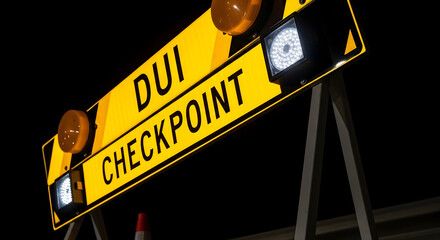
Colorado DUI Checkpoints: Know Your Rights and Responsibilities
A Colorado-focused guide to what happens at a sobriety checkpoint and what to do if the stop becomes a DUI investigation.
Seeing flashing lights, cones, signs, and officers directing traffic can be stressful—especially if you have never encountered a DUI checkpoint before. The most important rule is simple: stay calm, drive safely, and follow lawful directions.
A checkpoint stop is not the same as a DUI arrest. But what happens during the brief encounter can lead to a longer investigation if an officer observes signs of impairment or another violation.
This post provides general information, not legal advice for any individual situation.
Are DUI Checkpoints Legal in Colorado?
Yes. A sobriety checkpoint stop is a Fourth Amendment seizure, but courts have held that properly operated DUI checkpoints can be constitutional because the public interest in preventing impaired driving can outweigh the limited intrusion of a brief, regulated stop.
The U.S. Supreme Court upheld a properly structured highway sobriety-checkpoint program in Michigan Department of State Police v. Sitz, 496 U.S. 444 (1990). The Colorado Supreme Court likewise held that a state patrol sobriety checkpoint did not violate the federal or Colorado constitutional protections against unreasonable searches and seizures in People v. Rister, 803 P.2d 483 (Colo. 1990).
The details matter. In Rister, the checkpoint was authorized and operated under procedures limiting officer discretion, using visible signs, stopping vehicles systematically, and confining the initial encounter to a brief license check and observation for signs of impairment. A checkpoint that is not properly planned or administered may raise different legal questions.
What Should You Do When You Approach a Checkpoint?
Slow down and follow traffic-control signs and officer directions. Do not make unsafe turns, ignore signals, or drive around a checkpoint.
Have your license and vehicle documents accessible. Keep them in a safe location; do not rummage or make sudden movements when an officer approaches.
Be polite and calm. A short interaction is usually the goal of the initial checkpoint screening.
Do not volunteer unnecessary information. You can communicate respectfully without offering a detailed account of where you have been, what you drank, or what substances you may have used.
Do not lie or provide false documents. That can create separate legal issues.
Do not attempt to evade an officer after being directed to stop. A lawful turn before reaching a checkpoint is not the same as ignoring an officer’s direction or driving unsafely.
A driver should never drive after using alcohol, marijuana, illegal drugs, or impairing medication in a way that makes safe driving impossible. The safest choice is to arrange a sober ride before getting behind the wheel.
What May Happen During the Initial Screening?
An officer may briefly request identification and observe the driver for signs of impairment. In the checkpoint program reviewed in Rister, officers looked for conditions such as an odor of alcohol, slurred speech, unusual behavior, visual problems, or lack of coordination. People v. Rister
If the officer does not observe a reason for further investigation, the driver should generally be allowed to proceed. If the officer observes facts suggesting impairment or another violation, the driver may be directed out of traffic for further questions or testing.
The initial checkpoint encounter and a later DUI investigation are legally different stages. A longer detention, roadside testing, arrest, or chemical-test request depends on the circumstances the officer develops after the initial stop.
Field Sobriety Tests and Preliminary Breath Testing
If an officer suspects impairment, the officer may ask a driver to perform roadside exercises or take a preliminary breath test. These requests are different from the formal chemical test requested after a DUI arrest.
Drivers should remain respectful and avoid physically resisting or obstructing an officer. But it is important to understand that decisions about roadside exercises and a preliminary screening test are different from the statutory expressed-consent test discussed below. The facts, the officer’s instructions, and the type of requested test can all matter in a later case.
If the encounter becomes a DUI investigation or arrest, seek legal advice promptly rather than trying to resolve legal questions on the roadside.
Colorado’s Expressed-Consent Law: The Chemical Test After Probable Cause
Colorado’s expressed-consent law applies when an officer has probable cause to believe a person drove in violation of Colorado’s DUI, DUI per se, DWAI, or underage-driving laws. At that point, the statute requires the driver to take, complete, and cooperate in an evidentiary blood or breath test for alcohol, subject to the statutory rules. For suspected drug impairment, the statute authorizes blood, saliva, or urine testing when the statutory conditions are met. C.R.S. § 42-4-1301.1
This is not the same as a preliminary roadside breath test. The chemical-test decision after an arrest can have separate DMV and criminal consequences. A driver’s choice of blood or breath under the statute, the timing of the request, and whether the driver cooperates can be important.
What Are the Consequences of a Chemical-Test Refusal?
A refusal to take, complete, or cooperate in the required expressed-consent test can trigger a separate driver’s-license revocation. For a first refusal, Colorado’s statute generally provides for a one-year revocation, subject to applicable restricted-license provisions. C.R.S. § 42-2-126
A test result showing an excess BAC can also lead to an administrative revocation separate from the criminal case. The Department of Revenue’s license determination is independent of the court’s disposition of the related criminal charge. C.R.S. § 42-2-126
If a notice of revocation is served, the deadline to request a Department of Revenue hearing is generally seven days after the notice is received. Missing that deadline can waive the hearing right. C.R.S. § 42-2-126
Rights and Responsibilities After an Arrest
If an arrest occurs, the next priorities are practical:
Keep every document, including the citation or summons, notice of revocation, temporary permit, bond paperwork, and tow receipt.
Do not drive unless you have valid legal authority to do so.
Calendar the DMV hearing deadline and court date immediately.
Follow all bond and protection-order conditions.
Write down what you remember about the checkpoint, the officer’s instructions, the timing, tests, witnesses, and video cameras while details are fresh.
Preserve possible evidence without altering or posting it online.
Seek case-specific legal advice promptly.
The Bottom Line
Colorado DUI checkpoints may lawfully involve a short, systematic stop and observation. The best approach is to remain calm, comply with lawful traffic and identification requests, avoid unsafe or evasive driving, and understand that a roadside screening request is different from the expressed-consent chemical-test process that may follow a DUI arrest.
If the interaction leads to an arrest or revocation notice, act quickly. Colorado’s criminal case and DMV process are separate, and the DMV hearing deadline can arrive within days.
This post is general educational information and not legal advice. The legality of a particular checkpoint and the consequences of a specific DUI investigation depend on the actual facts, orders, and notices involved.